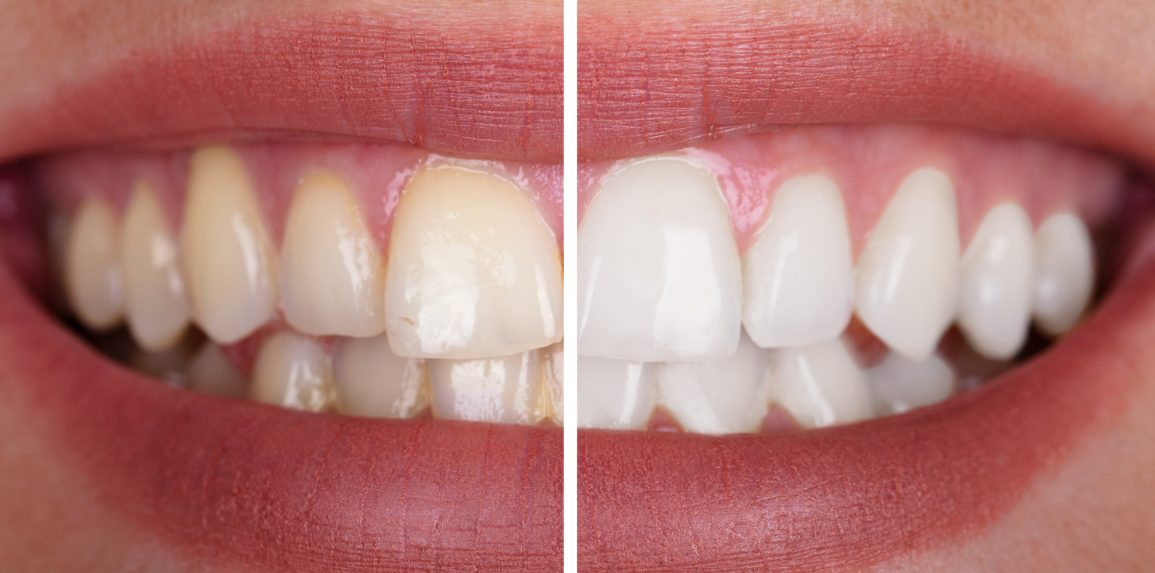
Teeth whitening is one of the most requested treatments in cosmetic dentistry — and it’s also one of the most misunderstood. Walk into any high street or scroll through Instagram and you’ll find dozens of products claiming to whiten teeth. But there’s a meaningful difference between professional teeth whitening carried out by a dentist and the strips, kits, and charcoal powders sold in shops.
This guide covers everything you need to know: how professional whitening works, what results are realistic, how much it costs, and what to look for when choosing a provider.
Professional teeth whitening uses hydrogen peroxide or carbamide peroxide gels to break down staining compounds inside the tooth enamel. The peroxide penetrates the outer layer of the tooth (the enamel) and reaches the dentine beneath, where most discolouration lives.
Unlike surface whitening products — toothpastes, charcoal powders, and over-the-counter strips — professional systems use clinically validated concentrations of peroxide that produce real, measurable change in tooth colour.
In the UK, only registered dental professionals are legally permitted to provide teeth whitening treatments using peroxide above 0.1% hydrogen peroxide. This is a legal requirement under the EU Cosmetic Products Regulation, retained in UK law. Any non-dental business offering whitening above this threshold — beauty salons, mobile therapists, online kits — is operating illegally and potentially putting your teeth and gums at risk.
There are two main approaches used in UK dental practices:
This is the most widely used professional method and, for most patients, produces the best combination of results and safety.
Your dentist takes a digital scan or impression of your teeth and fabricates thin, custom-fitted trays. You fill these trays with whitening gel and wear them for a set period each day — typically 30–60 minutes, or overnight, depending on the gel concentration.
The custom trays are reusable. Many patients top up their whitening periodically using fresh gel, which is available from their dentist. This makes home whitening excellent value over time.
In-surgery whitening applies a higher-concentration gel directly to the teeth in the dental chair, sometimes with a light or laser to accelerate the process. Common brands include Philips Zoom and Enlighten (which combines in-surgery and home whitening).
At The Edge Dental, we offer both home whitening and combined in-surgery protocols including Enlighten Evolution, which is widely considered the gold standard for predictable, long-lasting whitening.
Enlighten Evolution is a protocol that combines 2 weeks of at-home whitening with a single in-surgery appointment. It’s one of the few whitening systems that guarantees a result — specifically, the ability to reach Vita shade B1, which is one of the lightest natural tooth shades.
It uses a progressive whitening protocol that begins with lower-concentration home whitening to desensitise and condition the teeth, followed by a higher-concentration in-surgery treatment. This reduces sensitivity while maximising effectiveness.
For patients wanting the whitest possible result — particularly before events, weddings, or alongside other cosmetic treatments — Enlighten is often the best choice.
Professional whitening results are permanent, but teeth naturally re-stain over time as you eat, drink, and age. However, with reasonable care, results from professional whitening typically last 1–3 years before a meaningful top-up is needed.
Factors that affect longevity:
Yes — professional teeth whitening is safe when carried out by a dental professional, using appropriate products at appropriate concentrations. The most common side effect is temporary tooth sensitivity, which usually resolves within 24–48 hours. We recommend sensitivity toothpaste in the week before treatment and during the whitening period to manage this.
Whitening does not damage enamel when used as directed. However, it’s important to know that whitening gel does not change the colour of dental restorations — crowns, veneers, and tooth-coloured fillings will not whiten. If you have restorations on visible teeth, we’ll discuss whether their shade will match your new tooth colour and whether replacements are appropriate.
Important: Whitening treatment should only proceed on healthy teeth and gums. Active decay or gum disease needs to be treated first. Part of a proper consultation is making sure your mouth is ready.
Most adults with healthy teeth and gums are suitable candidates. However, whitening is not recommended for:
We always carry out a clinical assessment before whitening to confirm suitability.
Professional whitening is highly effective for stains caused by ageing, food and drink, and some medications. However, there are types of discolouration that don’t respond well to whitening:
In these cases, we’ll discuss whether whitening is likely to help, or whether a different approach would give you a better result.
Many patients choose to combine teeth whitening with complementary treatments for a complete smile refresh:
Ask us about our smile packages if you’re interested in combining treatments.
The Edge Dental is located in Alderley Edge, Cheshire, and provides professional teeth whitening for patients across Wilmslow, Macclesfield, Knutsford, Prestbury, and the wider North West.
We offer home whitening, Enlighten Evolution, and combination protocols. All treatment begins with a clinical assessment to ensure your teeth and gums are ready and to set realistic expectations for your result.
Call us or book online to arrange a whitening consultation.